Biochar’s Next Growth Phase: From Carbon Credits to Scalable Climate Solution
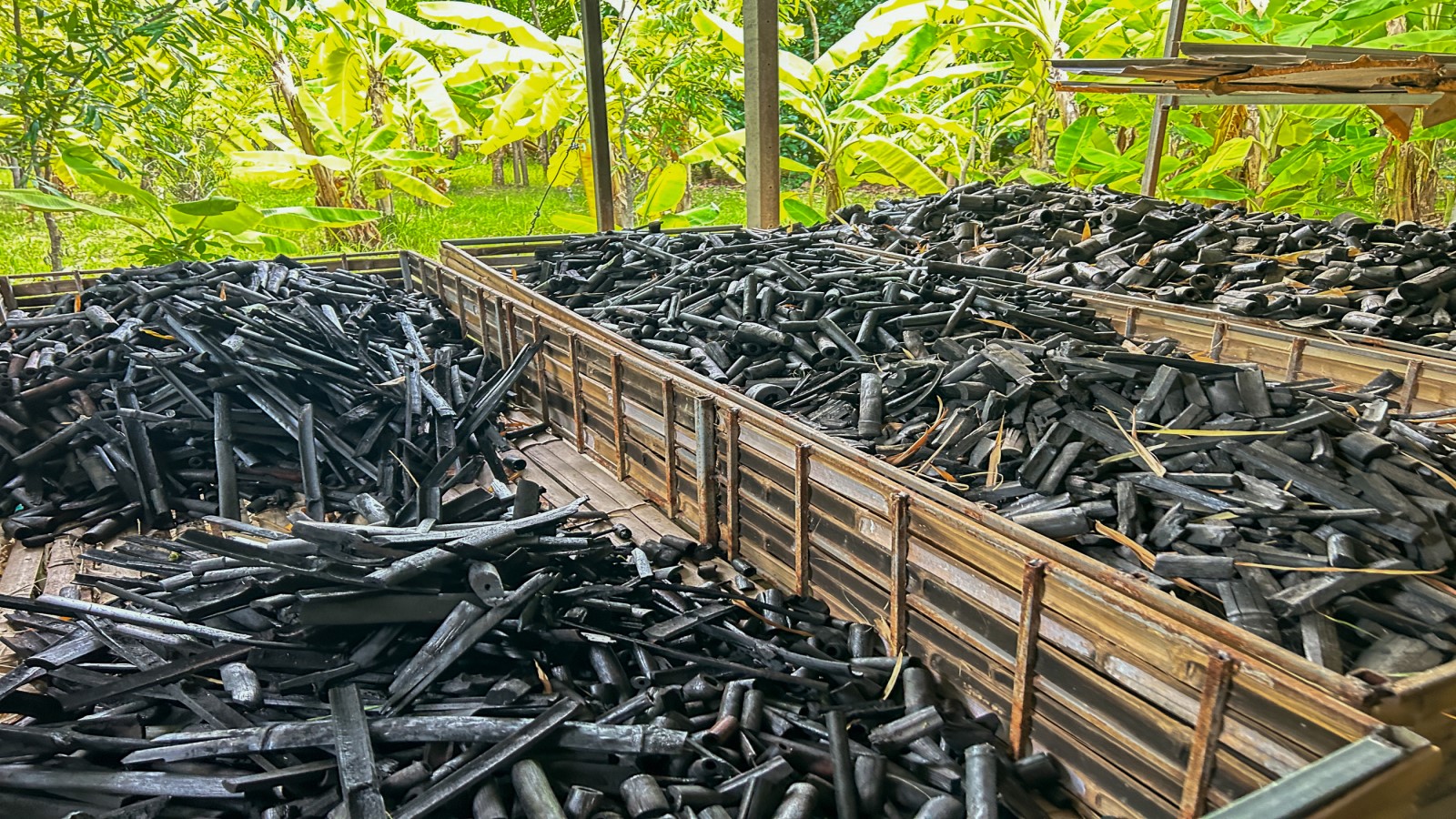
Biochar is gaining recognition as carbon removal’s ‘jack of all trades,’ thanks to its capacity to store carbon for centuries while improving soil health. Now, after years of pilot projects and cautious optimism, this charcoal-like material is moving from the margins toward market maturity — and investors are starting to take notice.
Momentum is building as we speak, with 20x market growth anticipated for the biochar-based carbon credits market. By the last International Biochar Initiative count, the global biochar market was growing at an estimated 91% annual rate and projected to reach $3.3B revenue in 2025.
Today, corporate buyers are increasingly signing offtake agreements, reflecting biochar’s growing reputation as a credible, IPCC-recognized carbon removal pathway with measurable co-benefits for soil and communities. Beyond sheer credibility, World Economic Forum research estimates biochar carbon removal can handle between 0.44–2.62 Gt CO2 removal yearly, covering up to 35% of CDR needs in climate stabilization scenarios.
So, what exactly is this material, and what do investors need to know about it? Let’s dig in.
The promise: Real-world benefits fueling a ‘biochar gold rush’
At its core, biochar is a stable form of carbon created by heating biomass — like crop residues, forestry waste, or organic byproducts — in a low or no oxygen environment, a process called pyrolysis. If the same material were left to decompose or burned in the open, most of its carbon would escape as carbon dioxide. Pyrolysis instead locks that carbon into a solid, carbon-rich structure that can remain stable for centuries, effectively turning waste into a long-term climate and soil solution.
There are two key and related sources of benefits driving much of the biochar gold rush.
The first and most prominent are its agricultural benefits, a recognition that isn’t entirely new. Across history, communities have added charred organic matter to soils to improve fertility — most famously, Indigenous peoples in the Amazon Basin, who created the enduringly fertile terra preta, or “dark earth.”
What we now understand is that biochar is remarkably porous — a single gram can have the surface area of two basketball courts. This unique structure gives it multiple benefits when applied to soil: it improves fertility, retains moisture, and helps bind nutrients more effectively. Studies have documented several benefits from applying biochar to soils, including roughly 20-30% improvements in water retention, nutrient absorption, microbial activity, and soil organic carbon, all of which contribute to higher crop yields.
The second key benefit lies in biochar’s ability to sequester carbon. Each kilogram of dry biomass can yield roughly 0.4–0.5 kg of biochar, capturing the equivalent of about 1.0–1.6 kg of CO₂. The extent of these carbon savings depends on several factors, including the type of feedstock, how the biochar is used, and the risk of carbon re-release into the atmosphere. Production methods also matter: artisanal approaches such as open “kontiki” kilns tend to generate higher emissions, while advanced industrial systems require greater upfront investment but deliver higher yields — and command higher carbon credit prices.
Together, these gains enhance resilience to drought and erosion, reduce greenhouse gas emissions, and strengthen long-term soil health.
The net lifecycle emissions benefit of biochar depends on several variables, such as feedstock quality, how the biochar is applied and performs in the field, and pyrolysis efficiency. Pyrolysis production methods range from artisanal approaches using small-scale kilns that convert 10–20% of biomass into biochar, to industrial facilities with specialized reactors that achieve 25–35% conversion rates and can process over 100 tons daily, though at higher capital costs of $300–500 per ton of biochar. (Furthermore, poor biochar production methods can actually be a net carbon source, rather than sink.)
When applied to soil, it can improve fertility, retain moisture, and store carbon that would otherwise return to the atmosphere. Beyond agriculture, biochar has other potential benefits and uses including water filtration and cement production.
Recent studies underscore this potential. Each kilogram of dry biomass can yield roughly 0.4–0.5 kg of biochar, sequestering about 1.0–1.6 kg CO₂ equivalent, depending on production conditions. Soil improvements can include 20% gains in water retention, nutrient absorption, and microbial activity, up to 30% increases in soil organic carbon, and roughly 10% higher crop yields. These benefits enhance resilience against drought and erosion, reduce greenhouse gas emissions, and improve long-term soil health.
Carbon markets: The promise and peril
Despite rapid expansion, the biochar market remains uneven. Voluntary carbon markets (VCM), where biochar has found most of its early traction, are relatively small- and, concerningly, in decline. Globally, only $500 million of carbon credits was traded in 2024, compared to $2bn in 2022.
Considering that Africa accounts for about 16% of the global VCM market and REDD+ (forestry) and cookstove projects account for ~90% of its carbon credits, this implies a very small potential market of just $8 million for biochar-based carbon credits. Even under optimistic projections, these numbers suggest VCM presents only a smaller than desired opportunity for biochar revenues. This begs the question of where the surge in demand is coming from. Nearly 80% of biochar’s current offtake agreements are concentrated among just three buyers: Microsoft, Google, and Frontier, an advanced market commitment fund backed by tech firms like Stripe and Shopify. Their early, large-scale purchases have helped establish market confidence and set price benchmarks, but the concentration also underscores how dependent biochar’s near-term growth remains on a handful of climate-forward corporates, rather than on a broad, liquid carbon market.
Frameworks like Article 6 may offer more promise, but biochar’s role is ambiguous, particularly given its pricing: Current voluntary market prices for biochar hover around $150 per tCO₂e, substantially higher than typical prices we are seeing in the Article 6 markets of around ~$30 per tCO₂e. The absence of established compliance mechanisms in Africa, combined with limited pathways to access global ones, leaves biochar developers in a difficult position: strong climate potential, but constrained market access.
Five insights to unlock biochar’s next growth phase
Bridging the gap between technology and market demand will be key to biochar’s next chapter. Investors are increasingly looking for ventures that move beyond carbon-credit dependency and build resilient, scalable businesses. Here are five key insights for identifying the most investible opportunities:
- Carbon credits alone won’t drive long-term growth. Many biochar projects currently earn some revenue from carbon credits, but long-term success will depend on developing non-carbon revenue streams. This means treating biochar less as a credit product and more as a platform technology that enhances economics in other sectors, such as increasing corn or rice or other crop yields. Carbon credits can help lower the price of end products and improve market access, but they should ideally complement — not anchor — a project’s core revenue model.
- Fertilizer and cement applications highlight potential investible models. Companies are showing that integrated business models can work. Biochar-based fertilizers can reduce input costs by as much as 50% while improving yields and soil health, and some low-carbon concrete blends demonstrate that carbon-credit-subsidized biochar can be cost-competitive while cutting emissions by roughly 60%. These kinds of examples illustrate tangible pathways for revenue beyond credits.
- Market differentiation is critical. The market will reward companies that build defensible products — those not easily replicated by simply mixing biochar with other materials. Investors should look for ventures with proven on-field performance and scalable distribution strategies. For instance, for a biochar company making fertilizers, some questions worth asking are what makes them differentiated to others? Why can’t another biochar producer just replicate their product? Can they successfully convince and distribute to farmers?
- Using the right type of financing: Some degree of “product–market fit” soul-searching is needed to determine what type of financing best suits each biochar venture. Many companies in the sector excel in operations and execution but show limited technological innovation or scalability. For these players, project finance and adjacent capital sources may be more appropriate, where success depends on fast, efficient, and well-structured project development. Conversely, models focused on technology or software — such as platforms for biochar carbon credit tracking and verification — may be better suited to venture capital, setting aside broader questions about business models and market maturity.
- Feedstock can be a major bottleneck. Biochar production depends heavily on feedstock cost, quality, and availability. Costs range from $0–60 per ton, availability is seasonal, and competition with biofuel or other biomass uses can limit supply. Companies with a clear feedstock strategy will have the strongest economics and highest-quality carbon removal.
Where we go from here
Biochar is evolving from a promising experimental tool into a tangible, scalable climate solution. Unlocking its full potential requires bridging technology gaps across space, time, and industry. If it does, biochar can move beyond a niche carbon credit application to a mainstream climate solution that delivers meaningful emissions reductions and broad co-benefits for agriculture and industry all at once.
Author: Adarsh Kumar, a former Summer Associate at Equator VC. This article is a result of his research supported by Equator VC and Factor E.
full article
Thank you! You can now enjoy the full article